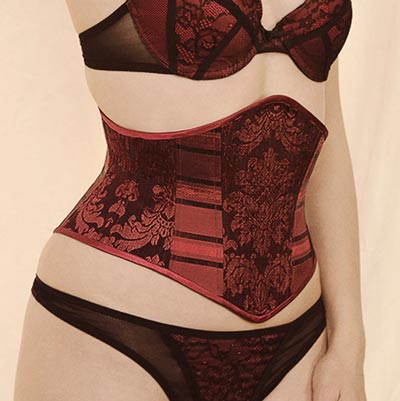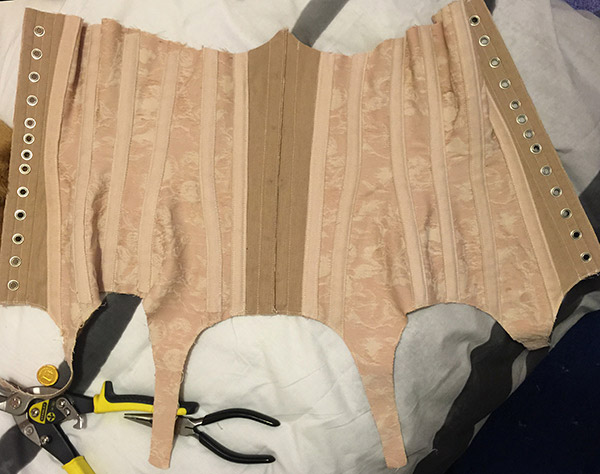
Tips for fully boning corset pattern panels 2

…continued.

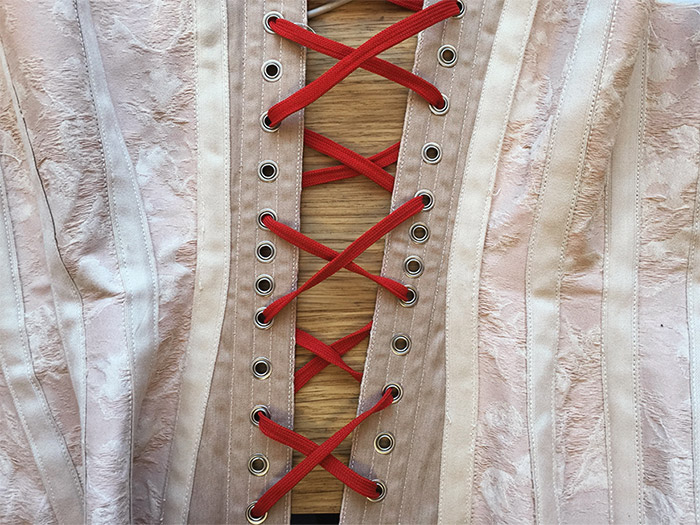
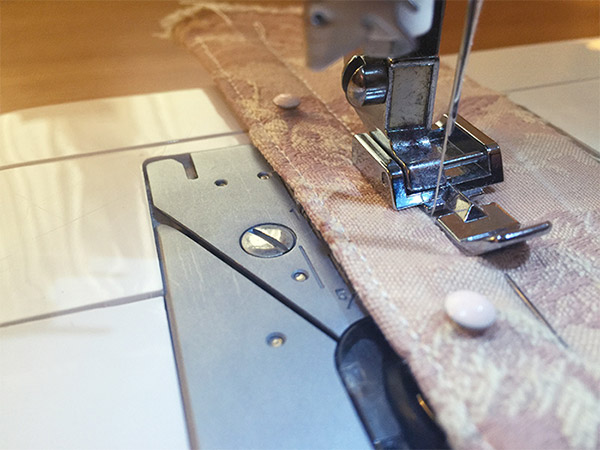
When fully boning a corset pattern panel the best way to make the boning channels is to use a thin piece of non-stretch cotton or muslin fabric. Lay your corset fabric on top and pin them together before sewing the boning channels. The layer of cotton fabric provides slip in pockets or boning cases for the many side by side bones. Don’t try to use individual strips of bone casing for fully boned bodice panels as they will make the panel very bulky. You can re-sew them through both layers once you attach the lining fabric if you feel the cotton is too thin to hold up against corset

Technorati Tags: Corset boning, corset pattern, Corset Training, make a corset

Corset Training Coutil

I’ve been asked about coutil and how to tell it from regular cottons. First let me explain what it is -

Coutil is a heavy cotton fabric designed specifically to make corset training corsets from. It has the least amount of stretch of any fabric available and is incredibly strong while also allowing the skin to breathe. Magic huh?

You can spot cotton coutil by its weave pattern. It has a herringbone weave to it, with it being stronger as the weave gets smaller. So a big 1inch wide herringbone pattern would be less than ideal. It can come mixed with other fabrics, polyester cotton mix is the most common but these feel plastic in comparison and if your going to be corset Training over 10 hours a day your skin will thank you for choosing a 100% cotton coutil.

Coutil also comes in satins, these are almost as strong but don’t have a herringbone weave so are harder to spot. It’s best to buy from corsetry suppliers to guarantee your getting the good stuff but if you come across it in a fabric store you can tell its quality from the price tag usually – it’s very expensive, and by giving it a tug to check the stretch resistance.

Technorati Tags: Corset Training, make a corset

The Visual Effect of Sprung and Spiral Corset Bones

When making your corset training corset you should now know from my last post that steel bones are the way to go. You’ll also know that spiral steels are a lot more flexible and bend in many more directions than sprung steels. What you might not know is that when you make a corset, visually the effect of using the two different steels can give your corset different looks.

Again it’s to do with the bendable nature of the two steels. Sprung steel bends less so will actually give you a sleeker look, holding the original cut of the corset pattern. Where as spiral will conform to your body shape more closely. For example a round tummy will be held flatter by a corset training corset with sprung steels.

Technorati Tags: corset making, corset patterns, Corset Training, make a corset

Sprung or Spiral Steel?

We talked in the last post about the perils of using plastic bones to make a corset with, but which type of steel will suit you and your corset?

The main difference between sprung (the flat strips) and spiral (the wire wound tightly into strips) is their bendability. Unlike plastic that weakens if it bends too much, steels can bend a great deal further without developing weak points and kinks. This is great as the body needs to bend and stretch during everyday activities. A corset training corset needs to be robust and allow for this movement as it is worn for 8 hours plus a day.

Both steel types are springy enough for everyday corset training but spiral steel bones will give more movement as they bend a lot easier than their solid counterparts which like to spring back into their original position, hence the name ‘sprung steel bones’.

Spirals also bend in directions the solid steels can’t. Spiral will bend sideways and twist which means it’s the only type you can use for boning diagonally over say the curve of the hips. Creative boning you see on high end corsets is normally done with thin 5mm spiral which puts up little resistance but is great for boning whole panels or panel sections. I recently boned a whole bodice with a few hundred of these.

So if you need more support for say plus sized corsets or back support, use sprung steel bones. If your priority is freedom of movement, eg you lead an active lifestyle or your making a corset for an inexperienced corset wearer who won’t be used to the restrictive garment, opt for spiral steel boning.

Technorati Tags: Corset Training, make a corset

Boning material for Corset Training

There are a few types of material used to make corset bones from and as a beginner learning to make a corset for the first time, you can be forgiven for opting for the plastic option. Using steel in a garment can seem a scary and uncomfortable prospect.

Steel bones are however, the most comfortable material you can use. Steel supports the body in a way that plastic bones can’t. Plastics will bend and then become weak at those points where they have bent. They can then snap after extended wear. They’re useless for corset training because of these traits and somewhat dangerous too. A broken bone can go through the lining of a corset and pierce the skin. If you want to make a corset suitable for waist training you will have to use steels.

Corset steels come in two types –
Sprung steel – which is a solid springy strip of steel normally covered in a white plastic coating.
Spiral steel – this is made of a steel wire. Two steel wires are wound into a tight strip of spirals. Check out the picture below for the plastic, sprung steel and spiral steel types. For corset training corsets you need to use steel, so plastics are only a viable option for stage costumes, lingerie or fancy dress.

20130517-080428.jpg

In my next post I’ll talk about the properties of sprung and spiral steels to help you pick the right one for your corset.

Technorati Tags: Corset Training, make a corset

Closures For Corset Training

So earlier we talked about zip closures, but can you make a corset with any other kinds besides the traditional busk?

Well, yes, there are several methods of front closure in use on corset training corsets.

Lacing – yes I know it seems obvious but it’s often overlooked, you can lace yourself in back and front. It looks ever so stunning to see a corset with several panels of lacing, often front back and sides. This works well for a dramatic evening ensemble but is as time consuming as lacing into a front closed corset.

Swing lock clasps – these have become so popular you can now buy them along side steel bones that have been drilled with holes for them. Exotic looking yet as strong as a normal busk they’re fast to get on and off but do require riveting.

Buckles -
Very steampunk, these can work but normally they’re teamed with another method, eg a zip. Used over a normal busk to disguise it you can enjoy the look of a buckled bodice with all the strength of the hidden busk. Ideal for corset training where you need a strong closure.

Technorati Tags: Corset Training, make a corset

Zip closing corsets

We all know the traditional front opening method for a corset is the busk – a series of metal loops and knobs welded to two sprung steel corset bones. Nice and solid, unlikely to brake or bend.

But what if you want to make a corset with a zipper closure? Well, while using a zipper down the front to close your corset isn’t likely to be as problem free or as strong a method as the busk, it can still be used. Be warned though, buying a zip-up corset ‘off the peg’ means it’s very unlikely to be of a corset training standard.

If you do decide to zip-up when you make a corset, make sure you get an industrial strength zip! More the sort you get on sofa cushions than summer dresses :)

So how about other closures? Well we’ll talk more about other options in the next post…

Technorati Tags: Corset Training, make a corset

Fabrics For Corset Trainig Corsets


Continuing from yesterday’s discussion on outer corset fabrics, there are a number of heavyweight materials that add that feeling of quality you just don’t get from cheap ready mades.

Brocades are a very popular choice, the heavy ones of course, not the cheaper ones you can get. You should be able to tell from handling a fabric if it is of a decent thickness.

For corset training the heavy duty twills and cottons are a good choice as they add much needed strength. Corset making coutil comes in satin finishes which is ideal but very expensive. You can often buy it by the half or quarter meter however, so you only need pay for what you plan to use.

If your looking to make a corset on the cheap but still want too quality try recycling old cushions! This is a great little tip as the thick fabrics used to upholster cushions, sofas and curtains are made to take the wear,tear and body weight of an active family using them. Scan the local thrift shops for vintage drapes, heavyweight bed sheets and scatter cushions.

Technorati Tags: Corset Training, make a corset

Corsetry Fabrics – What To Use?

Have you ever noticed those cheap corsets you see for sale online, or on girls in adverts for premium *ahem* men’s lines. They’re normally covered in a lightweight satin fabric that wrinkles and puckers around the seams.

Using cheap or light weight material on a corset is the quickest way to make the corset -look- cheap! A corset training corset is a very small and highly curved garment that has to change shape with the different positions of the body. You need an outer material that will lay flat over the thick cotton lining.

If your more experienced at making a corset and really want to use lighter weight materials I suggest getting an iron on backing fabric for them. If your going to make a corset for the first time however, your best bet is to go for something heavyweight. Upholstery fabrics are the best, they lay flatter on account of their thickness and add strength for corset training purposes.

TBC…

Technorati Tags: Corset Training, make a corset

Personalize Your Corset Training Corset

So we’re learning how to make a corset? Then why not have some fun with it and make yourself a corset you can’t get anywhere else?

That sounds difficult, I’m only a beginner Scarlet! Ah but I’m not talking about fancy lacework or intricate design features. You can start with a unique fabric!

If your thinking its going to be difficult or expensive to imprint your personality on your own corset then think again. If your having a corset training corset custom made it quickly becomes expensive, but when your sewing it yourself whats stopping you being more flamboyant? There really are so many beautiful fabrics out there, along with trims and iron on appliqués. When it comes to buying fabric you need so little for a corset that you can go for the expensive luxury stuff. If it doesn’t have a large and obvious pattern for you to match up then a half meter is plenty. I’ve gotten short underbusts out of a quarter meter before! This is about the only aspect of making such a small and somewhat fiddly garment that works in the seamstresses favour.

You really can pick literally anything when it comes to picking a material for the outside of your corset, I recommend you avoid Lycra’s, very thin fabrics and stretch fabrics however, as these can be difficult to sew. I love quilting fabrics myself, but they don’t sit as smoothly as brocades and luxury upholstery fabrics which are more commonly used in corsets and really are perfect for the beginner. If you do go for a light-weight material like quilting cottons, then use an iron on backing fabric for added strength and to stop the wrinkling that occurs with thinner fabrics when used for corsetry.

If your completely new to corsetry and need full instructions check out my Express Corsetry Course which includes illustrated step-by-step instructions, 10 corset patterns and a full video on how to make a corset – it costs about what you’d pay for 2-3 shop bought corset patterns!

Technorati Tags: corset patterns, Corset Training, how to make a corset, make a corset

Corset Patterns for Corset Training (6)

Corset Pattern Piece Numbers

Another important thing to look for when choosing your corset pattern is the number of pattern pieces it has. This may not be obvious to the novice corset maker but the more pieces the better the shape and the stronger the corset.

Imagine the corset as a three-dimensional and fairly ridged shape, like the cubes and pyramids you played with in kindergarden. To follow the curves of the body closely it needs as many sides as possible. This allows for more comfort and a better fit.

As well as a better shape, more pieces also makes for a stronger garment. Corset bones are normally placed at the seams; either one bone next to the seam or two with the seam running down between them. Thus the more seams the more bones and the more bones the stronger the corset structure. A plus size corset especially should have at least 5 or 6 pieces per side (the corset pattern will normally make up just one side, when you make a corset you cut two lots of materials – flipping the pattern over in between). A corset training corset will often have 8 or more pieces per side if its custom made by a specialist maker who designs for serious tight lacers.


TBC

Technorati Tags: corset patterns, Corset Training, make a corset, tight lacing, waist training

Corset Patterns for Corset Training (4)

…The last type of underbust is the waist corset or corset belt. This isn’t really suitable for corset training but works well as a maintaining device if you want to sleep in something but can’t get on with a normal corset. The other option might be to get a tight girdle to sleep in.

The waist corset can be as little as 3 or 4 inches wide and runs around the waist area giving very little support to any other area on the torso. This would however be a great first corset pattern if your just starting to learn how to make a corset. I have a free corset pattern for this type on my patterns page. (Click the link along the top of the website).


Corset Belt

TBC

Technorati Tags: corset pattern, Corset Training, free corset pattern, make a corset

Designing Corset Training Corsets

This month I plan to design and make 2 unusual corset training corsets, these will be patterned up and added to the printable corset pattern range – you can check out the current patterns, one of which is a free corset pattern that you can instantly download, by clicking the corset patterns link at the top of this page).

So why unusual corsets you ask? Because one of the main benefits to making a corset yourself is that your imagination is your only limit! So to get the full benefit of corset making I’m going to design some extra special corset training corsets for you this month. Both should be finished by the end of next month.

The first you’ve seen designs for already if you’ve been reading my blog recently; the lace corset with its two layers of lace is itself going to be a single layer corset although you can use the corset pattern for a normal two layer. It will be nice and thin for wearing as underwear this summer and beautifully sensual with the black lace details over powder pink, the design and materials are pictured below. The second corset is going to be a fancy dress one for the comic convention I’m going to next month so that one will get made first. Stay tuned for full design and corset patterning!


Heres the original sketch for the Lace Corset Training Corset


This is the finalized design with scalloped edge (still debating the edge!)


And heres the 1st mock up for the corset pattern

Technorati Tags: corset pattern, Corset Training, how to make a corset, make a corset

Corset making, Final Design for the Lace Corset Training Corset

As you know I’ve decided to make a corset training corset with Lace detailing and today I’ve finalized the design.

I’m sticking with the scalloped edge and having two layers of lace at top and bottom edge with the middle section bare of lace. This should look visually very appealing :)

Here’s the finished sketch of the lace corset training corset -

20130328-090541.jpg

Technorati Tags: Corset Training, make a corset

Corset Making Materials Question

I was recently asked again about what materials should be used to make a corset from. So thought I’d go over it in length here.

A real corset training corset is made from at least two layers of material (Although I have seen some historical corsets with one) The inner or lining material should really always be coutil; which is a corsetry fabric made of cotton with a tight herringbone weave. I have known of several heavyweight materials with little stretch to them that have been used instead but in my opinion these aren’t as good. Never use denim, despite what you might think it’s very stretchy!


On the outside you can use more or less anything for your ‘fashion fabric’ layer or ‘decorative’ layer. Thicker materials that won’t wrinkle easily are by far the best for a professional look but I have often played with lightweight cottons although some starching or iron on backing fabric will add strength and help avoid wrinkling at the seams. The best materials by far are soft furnishing fabrics. The ones used for luxury cushions and curtains. These are a little more expensive but bare in mind you don’t need much.

Technorati Tags: corset making, Corset Training, fabric, make a corset

Costume or Corset?

There can be some confusion about the difference between a corset and a costume, theatre or plain old fancy dress outfit with a corset-like appearance. Having made a lot of corsets I can tell if the quality is lacking, but some people new to corsetry are still buying fancy dress outfits with ‘corsets’ or fancy dress sewing patterns for corsets, that fail to hold the body in shape and are sometimes made from stuff as insubstantial as Lycra! O yes, it happens.

If your looking to find a corset pattern that’s authentic or will be appropriate for tight lacing, stick to the laughing moon range or the simplicity historic pattern range which are drafted from real museum examples of Victorian and Edwardian era dress.

The other thing to look at when buying pattern or outfit is the material, if a corset pattern doesn’t have a lining of stiff material or say to use steel bones it’s not for a proper corset. The same thing goes for buying ready mades, if there isn’t a steel bone running along next to the eyelets it won’t stand being tightened properly. If it stretches or isn’t cotton lined its no good as a functional corset. Use a bit of common sense and you can’t go far wrong.

Technorati Tags: corset pattern, Corset Training, make a corset

How To Make A Bodice Article

We have a new article up on the articles page called How To Make A Bodice, Not A Corset. The point of which is to give you a bit more info on the difference between a bodice pattern and a corset pattern as well as the main differences between corset making and learning how to make a bodice.

All the skills needed are the same but there will still be some aspects of the bodice pattern not covered in basic corset design. Things like straps, tabs and the infamous fully boned panel.

Another thing to remember about the boned bodice or ‘stays’ is that the bodice pattern, by design, isn’t a good corset training choice due to its shape and lack of support below the waist line. That aside if you want a dramatic look for a period costume or fancy dress outfit and you don’t mind the odd gasp of admiration or jealous stare (who would) than an Elizabethan bodice pattern is the obvious choice for the corset maker.

Technorati Tags: Bodice pattern, corset design, corset making, Corset Training, make a bodice, make a corset

Jazz it up with alternating corset pattern panels

I’ve been asked by an inexperienced corset maker – what might be an easy way to make a corset look exciting without too much extra effort or sewing. Well that’s an easy one as their are lots of ways to customise your corset training corset easily and effectively with little or no extra effort. One method in particular jumps out at me…

Without any extra effort at all, the simplest way to spice up your corset making whether your designing a fashion only corset or a proper corset training one is to use 2 or more materials. Your corset pattern is made of panels and by cutting alternating panels from two different materials you can create a dramatically different look. Try quilted panels either side of the front panels, or completely different materials for each panel.

Technorati Tags: corset pattern, corset patterns, Corset Training, make a corset

Altering Corset Patterns

I have been asked on numerous occasions to simply explain how to alter a corset pattern to fit someone bigger or smaller than the pattern is intended for. The easiest way to explain is with pictures. Click any of the photos below for bigger images.

So you have your corset pattern like this -

This is a pattern for half a corset so measure the waist line of each piece and add them together to get half the waist. Double this and you have the total waist size for this corset pattern.

Measure your waist size (or the person who will wear it) if the corset is to be smaller than their waist take off 2 – 4 inches to get the size you need the pattern to be.

You may need to add a few inches to the waistline to make it fit, or take off a few.

Say the pattern above will make a corset with a 24inch waist but I need it to have a 27inch waist – so 3 inches bigger. The pieces above are for half the corset so I need to add 1.5 inches to them. I decide where to add them by looking at the pieces; I decide to add 0.25 inches to each piece with the exception of the thinnest one which I’ll add 0.5 to. If I were taking away 1.5 I might decide to take more away from the fatest piece. The added width does not have to be perfectly distributed, don’t over think this!

Now you simply cut the pieces down the middle and move them apart to make them bigger or together to make them smaller. The pictures below show how easy it is to alter this corset pattern.

Pattern piece we will be altering.


Cut down the middle, if your making the corset wider you will need a piece of scrap paper behind to stick the halves down on.

(Once you are competent with this method you can cut at the waist line too and angle the top or bottom in to make the bust or hips smaller, or angle out to make larger).


Use a ruler or tape measure to get the alteration the right size.


Stick the pieces back together and your done! You are ready to make a corset with your new pattern!

Remember the golden rule: Always make a mock up to check sizing, always always.


Technorati Tags: corset making, corset pattern, Corset Training, how to make a corset, make a corset

Comfort or glamour

Do you have to make a choice between comfort and glamour? I’ve found that with everything from shoes to underwear the world of fashion insists we make that choice, but does it have to be that way with the corset?

The obvious answer to the outsider would be yes, the corset is the epitome of vanity over comfort and only those with an extreme gratification for pain would disagree. Well I’m no seeker of discomfort and I definitely don’t enjoy the pain my 4 inch stilettos bring me, but I do enjoy a well made corset. It seems that (like with a custom made pair of shoes) the more expensive a corset the more comfortable. So yes you can have your cake and eat it but its going to cost you! The alternative is the home made route, obviously my favourite. The day I win the lottery I’ll pay Mr Pearl several thousand a pop to make my corsets, but until that day I’ll stay at my sewing machine thank you very much. Because a comfortable corset means a custom made one designed to fit your body specifically. So if you’ve not got the cash for a custom made every 6 months or so, but your adamant your going to take up corset training, take up corsetry too! Learn how to make a corset and you’ll save a packet as well as having the added satisfaction of being able to casually say – “What this? O I made this myself.”

Technorati Tags: Corset Training, corsetry, how to make a corset, make a corset

© Copyright Corset Training - Designed by Pexeto